AI in Budgeting and Forecasting: Advantages and Disadvantages
Explore advantages and disadvantages of AI in budgeting and forecasting: 30-50% accuracy gains vs. data risks. Tools, questions, case study, and steps for smart use.



Explore advantages and disadvantages of AI in budgeting and forecasting: 30-50% accuracy gains vs. data risks. Tools, questions, case study, and steps for smart use.

Discover how agentic AI in finance is transforming personal money management, fraud detection, and lending. Learn what it is, how it works, and real-world opportunities for everyday people.

Imagine waking up to a notification that an AI system has just detected unusual activity on your credit card and blocked a fraudulent charge before you even knew it happened. Or imagine opening your banking app to discover that an intelligent algorithm has automatically identified a way for you to save $200 this month based…

Discover the future of AI in finance: how autonomous agents, hyper-personalization, and democratized wealth management will transform banking by 2030.

Discover risks of AI in finance—bias, errors, privacy—and how to protect yourself with practical steps.

Understand the real challenges of AI in finance: black-box decisions, bias, inaccuracy, privacy risks, and what you need to know to use AI safely.

Learn how to keep data safe when using AI in your budgeting. Discover encryption, authentication, and privacy practices to protect your financial information.
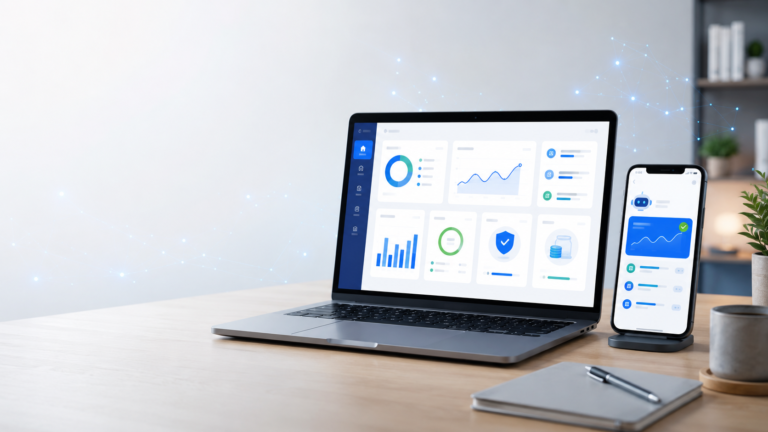
Discover how AI in finance enhances financial data integrity through fraud detection, error prevention, and automated compliance monitoring. Learn why it matters for your money.

Discover the best robo-advisors for beginners offering socially responsible investing (SRI) options. Low-fee ESG portfolios make sustainable investing simple and accessible—start today!

Compare robo-advisor vs. traditional financial advisor fees. Robo-advisors charge 0.25%-0.50%, while human advisors charge 1%-2%. Learn which saves you more money in 2025.
AI FinSage is an independent, reader-focused publisher. Some of the products and services featured on our website may come from partners who compensate us when readers click certain links, sign up, or complete qualifying actions.
This compensation may influence how and where products appear on our site. However, it DOES NOT influence our editorial opinions, reviews, ratings, or recommendations. Our content is created independently based on research, product quality, user value, security, pricing, transparency, and overall usefulness. We do not review every product or company available in the market, and product availability may vary by region.
The information on AI FinSage is provided for educational purposes only and should not be considered financial, investment, tax, or legal advice. Read Full Affiliate Disclosure
Your trust is more important to us than any affiliate partnership.