

Quick Answer: Can AI Help You Plan for Retirement?
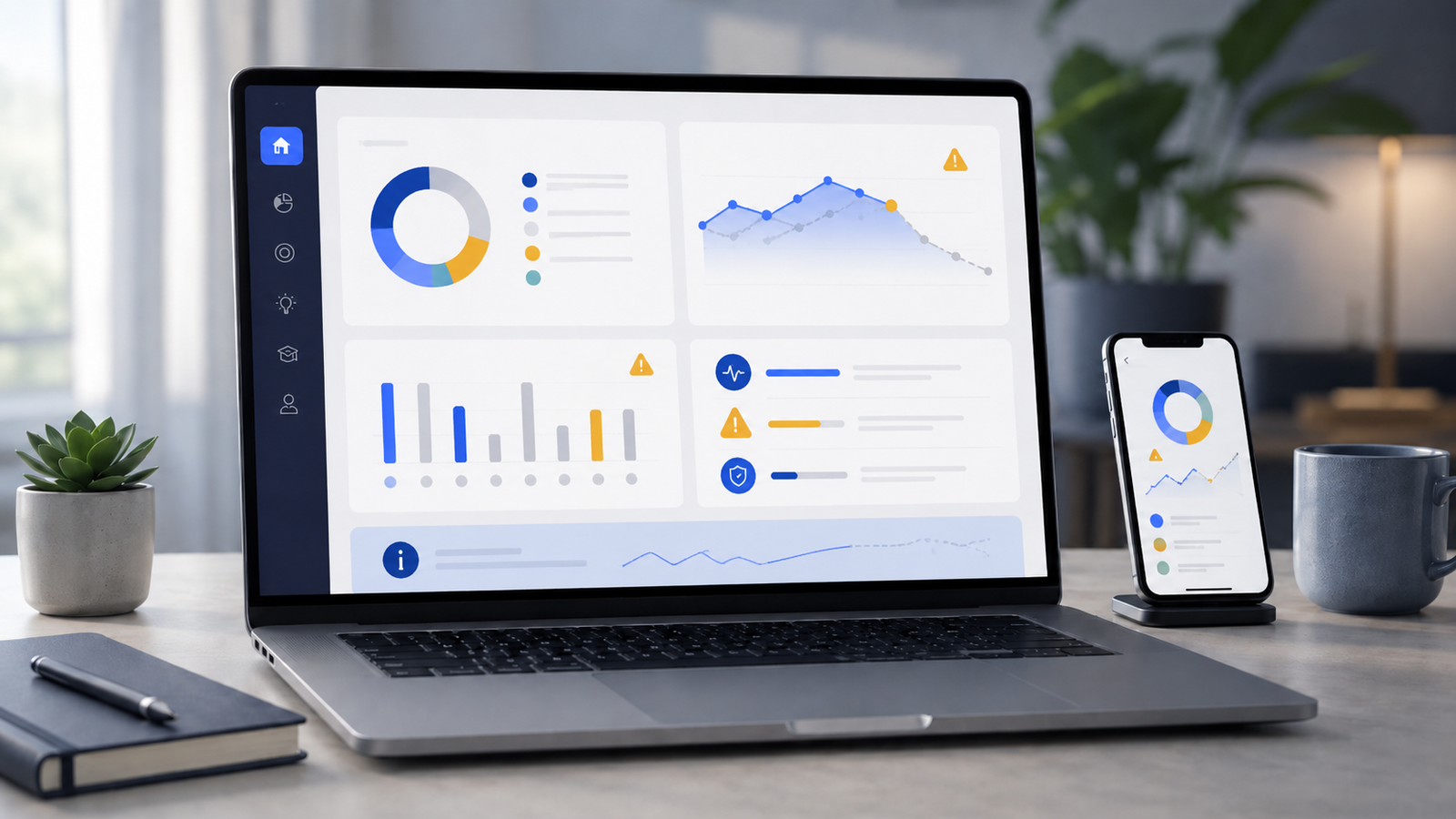
AI can help with retirement planning by organizing your financial information, comparing savings scenarios, estimating future needs, explaining investment risk, and helping you prepare better questions before choosing a retirement tool, robo-advisor, or financial adviser.
Its strongest use is scenario planning. AI can help you compare “what if” choices, such as retiring later, saving more, reducing expenses, adjusting investment risk, or changing contribution levels.
But retirement planning is built on assumptions. No AI tool can know future market returns, inflation, tax rules, healthcare costs, life expectancy, employment changes, pension reforms, or your future spending with certainty. Many retirement calculators also warn that results are uncertain because they depend on assumptions about returns, inflation, and user-provided data.
So the safest way to use AI for retirement is not to ask for one perfect number. It is to compare scenarios, understand assumptions, and review the plan regularly.
Who This Guide Is For
This guide is for US, UK, and EU readers who want to understand how AI can support retirement planning without relying on unrealistic projections.
It is especially useful if you are:
- Starting retirement planning for the first time.
- Comparing AI retirement planning tools.
- Using a robo-advisor for long-term investing.
- Trying to understand how much to save.
- Self-employed and planning without an employer pension.
- Near retirement and reviewing withdrawal options.
- Comparing retirement calculators.
- Trying to understand pension, investment, and savings trade-offs.
- Unsure whether you need software, a robo-advisor, or a human financial adviser.
This article is educational. It is not personal investment, pension, tax, or retirement advice.
What AI Retirement Planning Actually Means
AI retirement planning means using AI-powered tools, automation, or intelligent software to help you understand and compare long-term financial choices.
It can include:
- Retirement calculators.
- AI planning dashboards.
- Robo-advisors.
- Pension projection tools.
- Portfolio trackers.
- Budgeting and savings tools.
- Cash-flow forecasting tools.
- Withdrawal scenario tools.
- Financial chatbots that explain retirement concepts.
- Tools that compare contribution levels, retirement ages, or investment risk.
AI retirement planning is not about predicting your future perfectly. It is about making long-term choices easier to examine.
A useful AI retirement tool should help answer questions like:
- How much am I currently saving?
- What might happen if I increase contributions?
- What happens if I retire later?
- What if market returns are lower than expected?
- What if inflation is higher?
- What fees am I paying?
- Is my portfolio risk level suitable for my time horizon?
- What questions should I ask before choosing a retirement product?
The value is not certainty. The value is better preparation.
How AI Is Involved in Retirement Planning
AI can support retirement planning in several practical ways.
1. Savings scenario comparison
AI can compare different savings rates and show how changing monthly contributions may affect long-term outcomes.
For example, it can compare:
- Saving $200 per month vs $400 per month.
- Increasing contributions after a pay raise.
- Saving more aggressively for 10 years.
- Reducing contributions temporarily during a difficult period.
The numbers are estimates, not guarantees.
2. Retirement age modeling
AI can help compare possible retirement ages.
It may show how retiring at 60, 65, or 70 changes the number of years you need to fund, the time your investments have to grow, and the amount you may need to withdraw each year.
3. Investment risk explanation
AI can explain how different portfolios may behave over time.
For example:
- More stocks may mean higher long-term growth potential but more volatility.
- More bonds or cash may reduce volatility but may not grow enough for long-term needs.
- Inflation can reduce purchasing power over time.
4. Robo-advisor retirement portfolios
Robo-advisors may build and manage retirement portfolios based on your goals, time horizon, income, assets, and risk tolerance. Investor.gov defines a robo-adviser as an automated digital investment advisory program that usually collects this information through an online questionnaire before creating and managing a portfolio.
5. Fee visibility
AI-powered dashboards can help identify investment fees, platform fees, fund expenses, and advisory costs.
Small fees can matter over decades, so visibility is valuable.
6. Cash-flow planning
AI can help estimate future expenses, recurring costs, housing needs, debt payments, and possible income sources.
This is especially useful for freelancers, small business owners, and people with irregular income.
7. Retirement question preparation
AI can help you prepare questions for a financial adviser, pension provider, tax professional, or retirement platform.
This is one of the safest uses of AI: it helps you arrive better prepared.
>>MORE: Discover the best AI micro investing platforms for beginners.
Scenario Planning Is the Core Value
The best use of AI in retirement planning is scenario planning.
Instead of asking:
“How much money will I definitely need to retire?”
Ask:
“What happens under different assumptions?”
AI can help compare:
- What if I save 5%, 10%, or 15% of income?
- What if I retire five years later?
- What if investment returns are lower?
- What if inflation is higher?
- What if I reduce housing costs?
- What if I work part-time in early retirement?
- What if I have a large healthcare expense?
- What if I am self-employed for several years?
- What if I pause contributions during a downturn?
- What if I pay off debt before investing more?
This is how retirement planning becomes more useful.
One forecast can create false confidence. Several scenarios create better judgment.
Retirement Calculators vs AI Planning Tools vs Robo-Advisors
Not every retirement tool does the same job.
| Tool Type | What It Helps With | Best For | Main Limitation |
| Basic retirement calculator | Quick savings estimates | Beginners who need a starting point | Simple assumptions |
| AI retirement planning tool | Scenario comparison and decision support | People comparing savings, risk, and retirement age | May oversimplify real-life complexity |
| Robo-advisor | Automated investment portfolio management | Long-term investors who want lower-friction investing | Not full retirement life planning |
| Pension dashboard or workplace tool | Tracking pension or retirement accounts | Employees and pension savers | May not include all assets or goals |
| Portfolio tracker | Monitoring allocation, fees, and performance | DIY investors | Does not provide full advice |
| Human financial adviser | Personalized retirement, tax, and income planning | Complex or high-stakes decisions | Usually costs more |
>>HINT: Start with the job you need done. Do not choose a tool only because it has AI features.
Key Retirement Inputs AI Needs
AI retirement planning is only as useful as the information you provide.
A strong retirement planning tool usually needs:
- Current age
- Target retirement age
- Income
- Savings rate
- Current retirement savings
- Employer pension or retirement contributions
- Investment accounts
- Debt obligations
- Housing situation
- Expected retirement spending
- Risk tolerance
- Tax assumptions
- Inflation assumptions
- Expected retirement income sources
- Country or region
- Family and dependent needs
- Health cost assumptions
- Planned major expenses
If the tool does not ask enough questions, its output may be too generic.
A retirement plan based on weak inputs may look precise while being unreliable.
What AI Can Help You Understand
AI can make retirement planning easier to explore.
Contribution gaps
AI can compare your current savings rate with different target scenarios.
It may help you see whether increasing contributions gradually could improve long-term readiness.
Investment risk
AI can explain why a portfolio may be too aggressive, too conservative, or poorly diversified for a particular time horizon.
Fee impact
AI can help compare how fees affect long-term investment growth.
Spending assumptions
AI can help estimate retirement spending categories such as housing, food, insurance, travel, healthcare, taxes, and family support.
Retirement timing
AI can compare the impact of retiring earlier or later.
Debt and retirement trade-offs
AI can help examine whether paying down debt, increasing savings, or balancing both may be worth exploring.
Self-employed retirement planning
AI can help freelancers and small business owners organize irregular income, tax savings, and retirement contributions.
Adviser preparation
AI can help turn scattered concerns into a structured list of questions.
This is especially helpful when meeting a financial adviser, accountant, pension provider, or benefits specialist.
What AI Cannot Predict
AI can model possibilities. It cannot know the future.
Retirement planning depends on uncertain variables, including:
- Market returns
- Inflation
- Interest rates
- Tax rules
- Pension rules
- Social Security or state pension changes
- Healthcare costs
- Long-term care needs
- Life expectancy
- Job stability
- Family responsibilities
- Currency movements
- Housing costs
- Regulatory changes
- Personal spending habits
- Unexpected emergencies
This is why retirement planning should never rely on a single AI-generated answer.
A helpful AI tool should show assumptions clearly and let you test alternatives.
Decision Table: Which Retirement Support Fits Your Situation?
| Reader Situation | Useful Starting Point | Why | Caution |
| Just starting retirement planning | Basic calculator + educational guide | Helps build a first estimate | Do not treat the number as final |
| Saving monthly for long-term goals | Robo-advisor or investment platform | Can automate contributions and portfolio management | Check fees, risk, and regulation |
| Self-employed or freelance | Planning dashboard + accountant/adviser | Income and taxes may be irregular | Country-specific rules matter |
| Near retirement | Human adviser + scenario tools | Withdrawal decisions are complex | Sequence risk and taxes matter |
| Unsure about investment risk | Risk profiling tool + education | Helps understand volatility | A questionnaire is not a full plan |
| Comparing pensions or retirement accounts | Pension dashboard or account tracker | Improves visibility | May not include all assets |
| Cross-border finances | Qualified professional | Tax, pensions, and residency rules can be complex | Avoid generic AI answers |
| High debt near retirement | Debt adviser + retirement planner | Debt affects cash flow | Avoid risky quick fixes |
The more complex the situation, the more important it becomes to use AI for preparation rather than final decision-making.
Robo-Advisors and Retirement Planning
Robo-advisors can be part of retirement planning, especially for long-term investors who want automated portfolio management.
They may help with:
- Portfolio allocation
- Automated rebalancing
- Goal-based investing
- Risk profiling
- Recurring contributions
- Tax-aware features, depending on platform and country
- Retirement account management, depending on provider
Investor.gov explains that robo-advisers may allow investors to create and manage accounts through a web portal or mobile app, sometimes with little or no human interaction, and may offer lower costs than traditional investment advisory programs.
That can be useful for people who want a simpler investing process.
But a robo-advisor may not be enough for:
- Retirement income withdrawals
- Tax planning
- Pension decisions
- Estate planning
- Cross-border retirement
- Business-owner retirement planning
- Large concentrated positions
- Major life transitions
- Emotional decisions during market volatility
A robo-advisor may manage a portfolio. It may not manage your whole retirement life.
Retirement Planning for Freelancers and Small Businesses
Freelancers and small business owners often have a different retirement challenge: no automatic employer pension or workplace retirement structure.
AI can help by organizing:
- Irregular income
- Tax reserves
- Business expenses
- Monthly savings capacity
- Retirement contribution targets
- Emergency savings needs
- Cash-flow cycles
- Business reinvestment trade-offs
A freelancer might use AI to compare:
- Saving a fixed amount each month.
- Saving a percentage of each invoice.
- Increasing retirement contributions during high-income months.
- Separating tax savings from retirement savings.
- Paying down business debt before increasing contributions.
The key is flexibility. A retirement plan for irregular income should not assume every month looks the same.
For deeper guidance, this page should later link to:
- AI tax planning for freelancers
- AI budgeting for freelancers
- AI retirement planning for self-employed workers
- AI bookkeeping tools for small businesses
>>MORE: The New Financial Co-Pilot.
Safe AI Retirement Planning Checklist
Use this checklist before relying on any AI retirement planning tool.
- I know what country’s retirement rules apply to me.
- I have entered accurate income, savings, age, and account information.
- I understand the tool’s return assumptions.
- I understand the tool’s inflation assumptions.
- I know whether fees are included.
- I have compared at least two or three scenarios.
- I have tested a lower-return or higher-inflation scenario.
- I have reviewed my debt and emergency savings.
- I understand my investment risk level.
- I have not treated one projection as certainty.
- I know whether the tool is educational, automated investing, or regulated advice.
- I understand how my data is used.
- I know when to speak with a professional.
- I plan to update the projection at least annually.
A retirement plan should be revisited as life changes.
>>MORE: Sustainable Investing With AI.
Privacy and Security Risks in AI Retirement Tools
Retirement planning tools may request sensitive information, including:
- Age
- Income
- Savings balances
- Retirement accounts
- Investment holdings
- Pension details
- Employer contributions
- Social Security or state pension estimates
- Debt
- Household spending
- Tax assumptions
- Health and family information
- Target retirement age
Before using an AI retirement tool, check:
- What data the tool collects.
- Whether account access is read-only.
- Whether data is shared with third parties.
- Whether the tool uses your data to train AI models.
- Whether you can delete your account.
- Whether exports are available.
- Whether multi-factor authentication is supported.
- Whether the provider is regulated or supervised where relevant.
- Whether recommendations are explained clearly.
Retirement data is not just financial data. It can reveal your age, income, health assumptions, family situation, work plans, and long-term goals.
>>MORE: Learn how to use AI finance tools safely.
Common Mistakes to Avoid
Mistake 1: Trusting one retirement number
A single number can create false confidence. Compare several scenarios instead.
Mistake 2: Ignoring inflation
Inflation can reduce purchasing power over time. Any retirement plan that ignores inflation is incomplete.
Mistake 3: Forgetting fees
Platform fees, fund fees, adviser fees, and account costs can affect long-term outcomes.
Mistake 4: Assuming AI can predict returns
AI can model assumptions. It cannot guarantee future market performance.
Mistake 5: Using generic advice across countries
US, UK, and EU retirement systems are different. Pension, tax, and account rules vary.
Mistake 6: Treating robo-advisors as full retirement plans
A robo-advisor may manage investments, but retirement planning often includes taxes, income, healthcare, pensions, estate issues, and withdrawal strategy.
Mistake 7: Waiting until retirement is close
AI tools can help at any age, but earlier planning creates more room to adjust.
Mistake 8: Ignoring debt
Debt affects retirement cash flow. A retirement plan that ignores debt may be unrealistic.
Mistake 9: Over-sharing sensitive data
Do not upload detailed retirement, tax, health, or family information into tools you do not trust.
Mistake 10: Not updating assumptions
A plan made once and ignored for years becomes stale.
AI Retirement Planning Frequently Asked Questions
Can AI help me plan for retirement?
Yes. AI can help organize information, compare savings scenarios, explain investment risk, estimate future needs, and prepare questions for a financial adviser. It should not be treated as a guaranteed forecast.
Are AI retirement calculators accurate?
They can be useful, but they are only estimates. Results depend on assumptions about returns, inflation, taxes, fees, spending, and life expectancy. Some retirement calculators explicitly warn that results are uncertain and future outcomes cannot be guaranteed.
What information does AI need for retirement planning?
AI usually needs your age, income, savings, retirement accounts, contribution rate, expected retirement age, risk tolerance, spending assumptions, tax context, and country. The more accurate the inputs, the more useful the scenario.
Can a robo-advisor manage retirement savings?
A robo-advisor may help manage a retirement portfolio by using automated investment models. Investor.gov says robo-advisers generally collect information about goals, time horizon, income, assets, and risk tolerance before creating and managing a portfolio.
>>MORE: Discover the best robo-advisors.
Should I trust AI retirement projections?
Treat them as planning estimates, not promises. Use projections to compare scenarios, test assumptions, and ask better questions. Do not rely on one number to make major retirement decisions.
>>MORE: Learn how to use AI for money decisions safely.
What are the biggest risks of AI retirement planning?
The biggest risks include unrealistic return assumptions, ignored inflation, missing fees, poor risk profiling, generic country assumptions, privacy exposure, and overconfidence in long-term projections.
>>MORE: Discover risks of AI in finance.
Can AI help self-employed people plan for retirement?
Yes. AI can help self-employed workers organize irregular income, create flexible savings routines, separate tax reserves from retirement savings, and compare contribution scenarios. Local tax and pension rules still need verification.
How often should I update an AI retirement plan?
At least once a year, and after major life changes such as a new job, income change, marriage, divorce, inheritance, relocation, market downturn, health change, or business change.
Is AI retirement planning different in the US, UK, and EU?
Yes. Retirement accounts, tax treatment, public pensions, private pensions, and withdrawal rules differ by country. AI tools should be checked for country relevance before you rely on them.
When should I speak with a financial adviser?
Consider professional help if you are near retirement, have complex taxes, own a business, have cross-border finances, are making withdrawal decisions, received an inheritance, or feel unsure about risk, pensions, or long-term income.
Final Takeaway
AI can make retirement planning clearer, more organized, and easier to compare. It can help you test scenarios, understand risk, review assumptions, and prepare better questions.
But retirement planning is not a one-answer problem. It is a long-term decision process shaped by uncertain markets, changing rules, personal goals, health, income, taxes, inflation, and family needs.
Our recommendation is simple; Use AI to compare scenarios, understand assumptions, and prepare better decisions. You should not treat projections as promises.
The strongest retirement plan is not the one with the most confident forecast. It is the one you understand well enough to update as life changes.
>>MORE:How to Future-Proof Your Retirement Against Mediocre EU Growth.
This post contains affiliate links. We may earn a commission if you make a purchase through these links, at no additional cost to you. See our Affiliate Disclosure.